How long does full mouth rehabilitation take?
Full mouth rehabilitation (also called full mouth reconstruction or full mouth restoration) is not a single appointment but a sequence of phases spread over weeks to months. It moves from diagnosis, to stabilising the mouth, to a provisional test period, to the definitive restorations, and finally to maintenance.
The timeline depends on how many teeth are involved and whether gum treatment or implant surgery is needed before the restorative work can begin. The full mouth rehab stages below explain where the time actually goes.
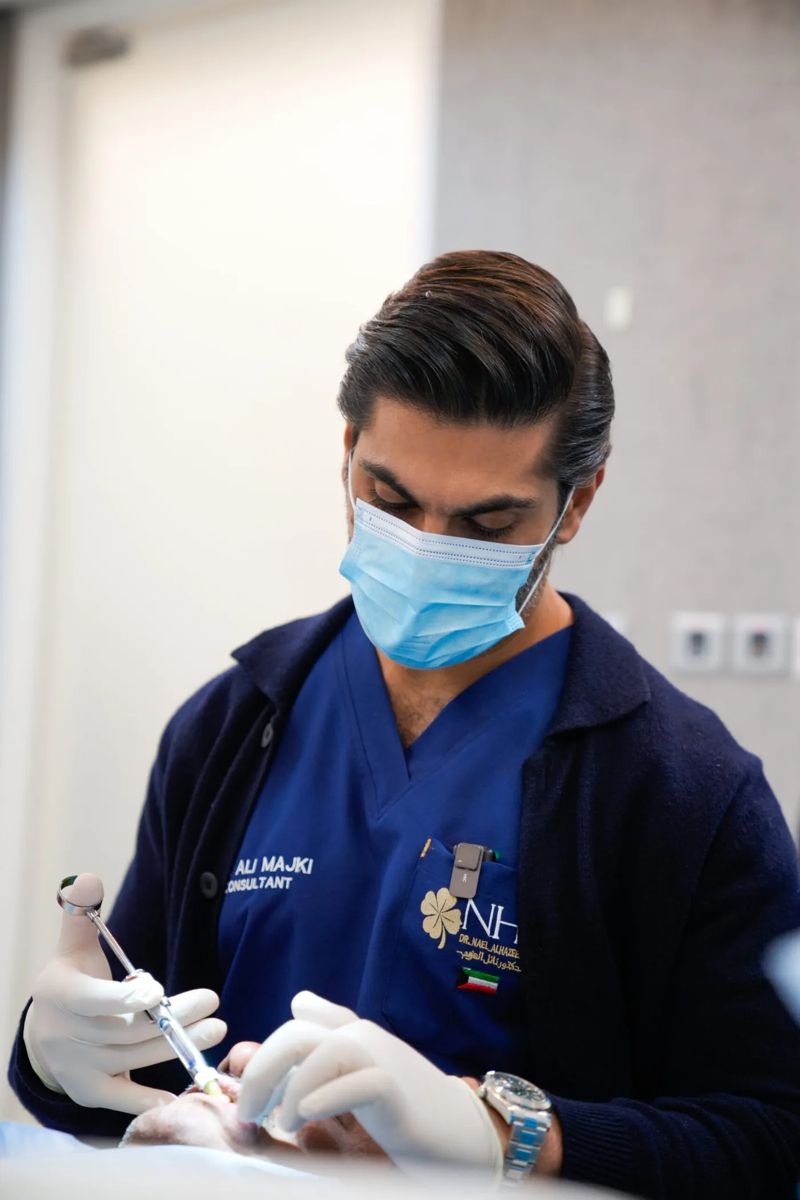
Phase 1: diagnosis and planning
Nothing is drilled at this stage. The mouth is examined, X-rays and photographs are taken, the jaws and bite are recorded, and digital scans and a smile design are prepared. From these the whole dental prosthetics treatment is mapped out before any tooth is touched, so every later step has a clear purpose.
Phase 2: stabilising the mouth
Before new restorations are built, the foundations are made healthy. Active decay is treated, gum disease is brought under control, teeth that cannot be saved are removed, and root canals are completed where needed.
If implants are part of the plan, the surgical placement is carried out by a specialist surgeon, and the bone is allowed to heal before the restoration on top is made. This healing time is often the longest part of the whole timeline.
Phase 3: the provisional test period
Temporary restorations are worn to rehearse the new shape, bite and tooth length before anything permanent is made. When the bite is being opened — increasing the occlusal vertical dimension — this trial lets you test comfort, speech and appearance first.
A systematic review (Chantler et al., 2025) noted that this evaluation phase is most useful when it uses fixed provisional restorations such as temporary crowns, and that its main value is helping the clinician manage expectations and sequence the treatment. In other words, the test period protects the final result.
Phase 4: the definitive restorations
Once the trial is confirmed, the final crowns, bridges, veneers and implant restorations are made and fitted, often in sections so the bite stays stable throughout. Materials are matched to the job: monolithic zirconia for strength at the back and in bridges, E.max for the most natural look at the front.
The durability of this phase is reassuring. A large systematic review (Sailer et al., 2015) found high five-year survival for modern ceramic single crowns, close to that of long-established metal-ceramic crowns.

Phase 5: retention, night guard and reviews
A rebuilt mouth needs protecting. People who grind are given a night guard so the new restorations are not fractured in their sleep, hygiene is tailored to the new crowns and bridges, and reviews every six months catch small problems early. This maintenance phase never really ends — it is what makes the work last.
What affects the timeline
The number of teeth being restored, the health of the gums and bone, whether implants are needed and how long they take to heal, the complexity of the laboratory work, and how quickly the individual heals all stretch or shorten the plan. A worn but otherwise healthy mouth moves faster than one that first needs surgery.
Scientific sources
Chantler J. et al. Importance of an evaluation phase when increasing the occlusal vertical dimension: a systematic review. Journal of Esthetic and Restorative Dentistry, 2025. doi:10.1111/jerd.13331
Sailer I. et al. All-ceramic or metal-ceramic tooth-supported FDPs? Part I: Single crowns. Dental Materials, 2015. doi:10.1016/j.dental.2015.02.011
Frequently asked questions
Is full mouth rehabilitation done in one visit? No, it is staged over several visits; only small cases finish quickly.
Does full mouth reconstruction hurt? Each step is done under local anaesthetic, and some soreness between stages is normal and short-lived.
Can I see the result before the final work? Yes, the provisional stage is a preview of the shape, bite and appearance you will get.
Will I be without teeth during treatment? No, temporaries keep you eating and smiling between stages.
How long do the final restorations last? Well-made ceramic restorations serve many years with good hygiene, a night guard for grinders and regular reviews.
Where can I get full mouth rehabilitation in Kuwait? Dr. Ali Majki sees patients at Aline Dental in Shaab, Kuwait; patients come to him from across Kuwait — from Jahra to Al-Rai and The Avenues — and from Doha and Qatar.