Teeth cleaning vs whitening: what is the difference?
Cleaning takes things off the tooth; whitening changes the tooth. A professional cleaning (scaling and polishing) removes plaque, tartar and surface stains so the teeth return to their own natural colour. Teeth whitening uses a peroxide gel that passes into the tooth and lightens that natural colour. One is hygiene treatment, the other is cosmetic, and many people who ask for whitening actually need a cleaning first.

What does a cleaning remove?
Plaque is the soft bacterial film that forms every day. Where it is left, minerals from saliva harden it into tartar (calculus), which no toothbrush can shift. Scaling, by ultrasonic tip or hand instruments, breaks tartar away above and just under the gum line; polishing with paste or an air-powder jet then lifts surface stains from tea, coffee and smoking.
The Cochrane review of routine scale and polish (Lamont et al., 2018) defines the treatment in exactly these terms, removal of plaque, calculus, debris and staining, and found with high-certainty evidence that regular scale and polish reduces tartar levels. In adults with healthy gums who attend regularly it made little or no difference to gum inflammation over two to three years, which is why the interval is set according to each patient's needs.
Does cleaning whiten teeth?
It can make them look whiter, sometimes dramatically, if the yellow or brown you see is tartar and surface stain. But the improvement stops at your natural shade. Cleaning cannot make enamel lighter than it is, and if your teeth are naturally yellowish or have darkened with age, they will be clean and still the same colour.
What does whitening change?
Whitening gels contain hydrogen peroxide or carbamide peroxide. The peroxide diffuses through the enamel and breaks down the coloured molecules inside the tooth, so the tooth itself reflects more light. This is what the search phrase "teeth whiting" is usually after: a shade change, not stain removal.
A Cochrane review of 71 trials of home-based whitening (Eachempati et al., 2018) found that peroxide gels in trays, strips and paint-on products whitened teeth compared with placebo over periods from two weeks to six months, though the certainty of the evidence was low to very low. The commonest side effects were tooth sensitivity and gum irritation, more frequent with higher concentrations, and described as mild and transient.
Whitening does not remove tartar and does not treat gum disease. It also does not lighten fillings, crowns or veneers to match the teeth, and a review of whitening research (Carey, 2014) lists degradation and unacceptable colour change of existing restorations among the risks patients should hear about beforehand.
Scaling vs whitening: which one do you need?
Look closely in good light. Deposits you can feel with your tongue, a rough yellow or brown band along the gum line or behind the lower front teeth, dark lines between teeth, and gums that bleed when you brush all point to a cleaning.
Teeth that are smooth and clean but evenly yellow or dull, a colour that has deepened gradually over years, or a shade that no longer matches how you want to look point to whitening.
A single dark tooth is neither: it usually means a problem inside that tooth, such as an old injury or a root canal treatment, and needs its own diagnosis. White or brown patches present since the teeth erupted are also a separate question.
Why does the order matter?
When both are needed, cleaning comes first. Gel cannot reach enamel that is covered by tartar and plaque, so whitening over deposits gives a patchy result. Inflamed gums sting when gel touches them. And once the surface stain is gone, the true starting shade can be recorded, which sometimes shows that whitening is not needed after all.
Having teeth cleaned and whitened in one plan is common. Whether the two happen at the same appointment or a few days apart depends on how the gums look after the cleaning; if they are sore or bleeding, it is kinder to let them settle first.
What will neither of them fix?
Decay, worn or chipped edges, grey discolouration from within a tooth and old discoloured fillings are not stain and will not respond to either treatment. They need restorative care such as a new filling, bonding or a veneer, and it is better to hear that at the examination than after a course of whitening.
What happens at the clinic?
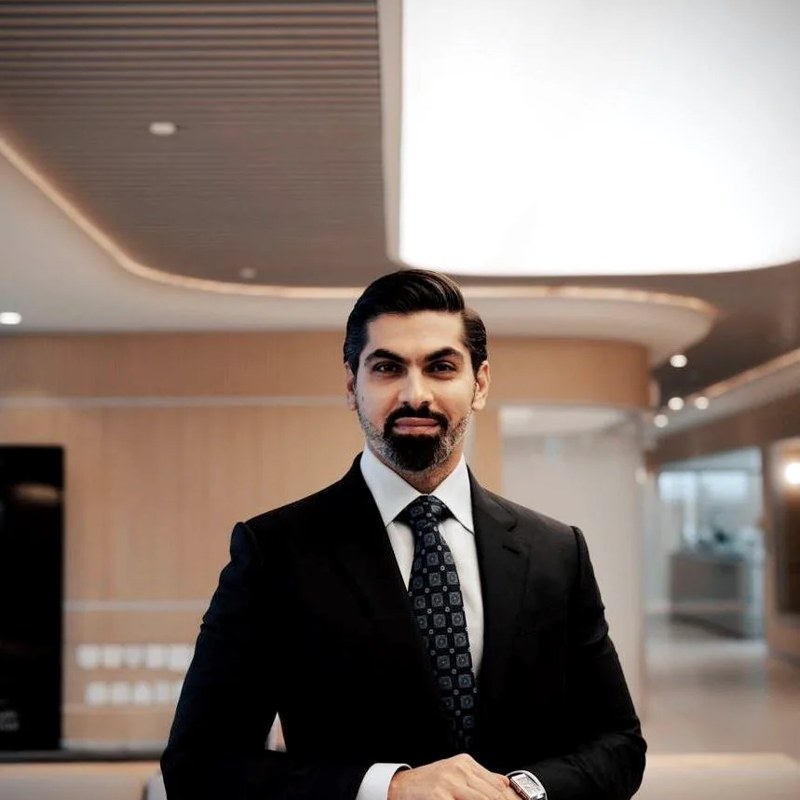
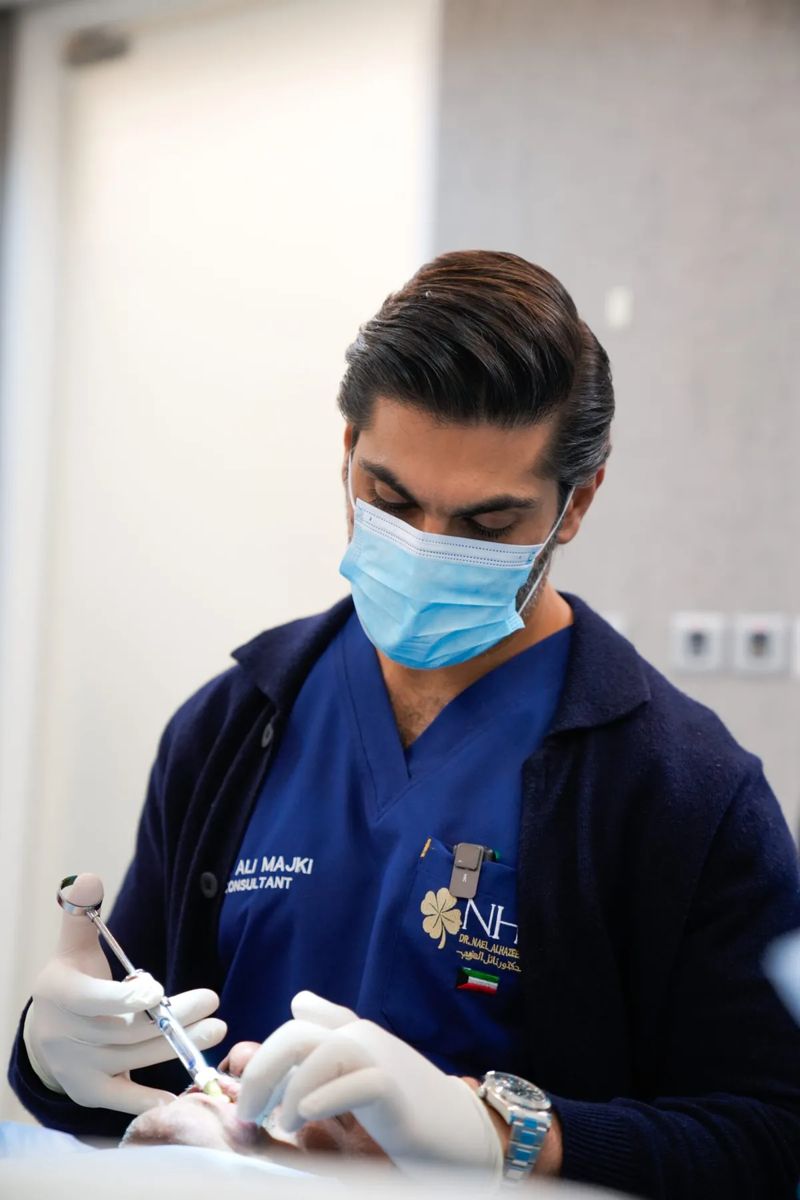
At Aline Dental in Shaab, Dr. Ali Majki, consultant in comprehensive and cosmetic dentistry, starts with an examination that separates the three things people call "yellow teeth": deposits, natural shade and tooth damage. The cleaning is done, the shade is recorded, and only then is whitening discussed, with the limits explained for any teeth that carry fillings or crowns.
Scientific sources
Lamont T., Worthington H.V., Clarkson J.E., Beirne P.V. Routine scale and polish for periodontal health in adults. Cochrane Database of Systematic Reviews, 2018; 12: CD004625. doi:10.1002/14651858.CD004625.pub5
Eachempati P., Kumbargere Nagraj S., Kiran Kumar Krishanappa S., Gupta P., Yaylali I.E. Home-based chemically-induced whitening (bleaching) of teeth in adults. Cochrane Database of Systematic Reviews, 2018; 12: CD006202. doi:10.1002/14651858.CD006202.pub2
Carey C.M. Tooth whitening: what we now know. Journal of Evidence-Based Dental Practice, 2014; 14 Suppl: 70-6. doi:10.1016/j.jebdp.2014.02.006
Frequently asked questions
Does cleaning whiten teeth? It removes tartar and surface stains, so teeth often look brighter, but only back to their natural shade. It does not lighten the enamel itself.
Should I get my teeth cleaned before whitening? Yes. Clean enamel whitens more evenly, and healthy gums tolerate the gel better.
Can teeth whitening remove tartar? No. Tartar is a hard deposit that has to be removed mechanically; whitening gel has no effect on it.
Is scaling bad for enamel? Scaling removes deposits, not enamel. Teeth may feel sensitive or seem to have small gaps afterwards because tartar that was covering them has gone.
How often do I need each one? Cleaning is repeated at an interval your dentist sets from your gum health and how fast tartar builds. Whitening is occasional and is topped up only when the shade has faded.
Where can I have my teeth cleaned and whitened in Kuwait? Dr. Ali Majki sees patients at Aline Dental in Shaab, Kuwait; patients come to him from across Kuwait — from Jahra to Al-Rai and The Avenues — and from Doha and Qatar.