What are the disadvantages of veneers?
The main veneers disadvantages are that the treatment is usually irreversible, it often means removing a thin layer of healthy enamel, and the thin ceramic can chip or debond over the years. For the right patient a veneer transforms a smile, but it is a lifelong commitment to maintenance and eventual replacement, not a one-off fix.

Veneers are usually irreversible
To make space for the shell and let it sit flush with the neighbouring teeth, a small amount of enamel is normally shaped away. Enamel does not grow back, so once a tooth is prepared it will always need a veneer or crown on it. Veneers, sometimes typed vaneers or veners, are therefore a decision to maintain that tooth cosmetically for life.
Enamel removal and sensitivity
Because a veneer removes part of the enamel, some teeth become temporarily sensitive to hot and cold afterwards. Minimal-prep and no-prep options exist for suitable cases and remove little or no enamel, but they are not right for every situation — teeth that are already bulky or badly positioned usually still need preparation.
Debonding, chipping and fracture
A veneer is a thin piece of ceramic bonded to the tooth. In a large systematic review the main problems recorded were debonding in about 2% of veneers, chipping or fracture in about 4%, and new decay at the margins in about 1% over a median of nine years. Those are small numbers, but they are not zero: a veneer can come off or crack, especially under heavy biting forces.
Who should avoid veneers?
Veneers are a poor choice for anyone with active tooth decay or untreated gum disease — these must be controlled first. People who grind or clench heavily put veneers at much higher risk of chipping and should either address the grinding with a night guard or consider a stronger option. Teeth with very large existing fillings or little enamel left may be better served by a crown, which wraps the whole tooth, than by a veneer.
How long do veneers last?
The same review found overall survival of roughly 89% at a median of nine years, with glass-ceramic veneers around 94% and older feldspathic porcelain around 87%. That is a good record, but it also means a proportion need repair or replacement within a decade. More broadly, the evidence on fixed restorations shows every bonded or cemented restoration carries a measurable failure rate over time rather than lasting forever, so planning for maintenance is part of the decision.
Lowering the risks
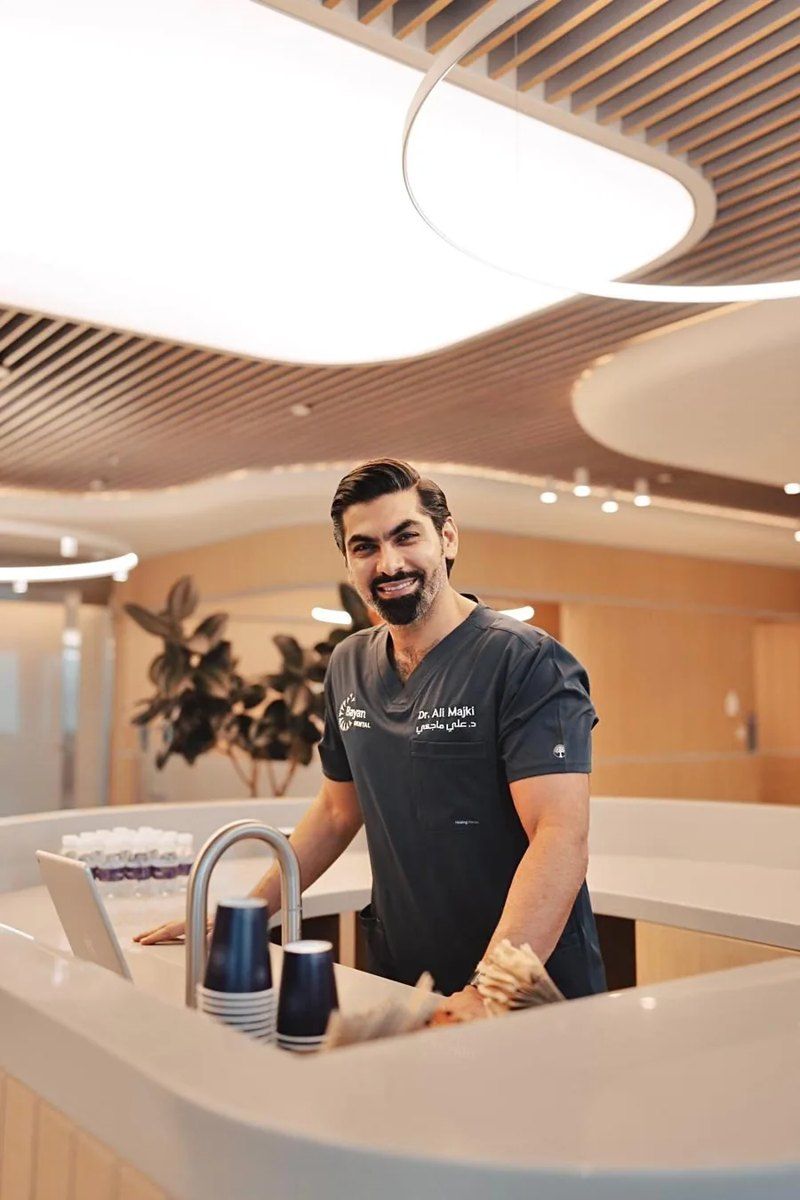
Good case selection is the single biggest factor. A careful examination, treating any decay or gum inflammation first, a trial of the proposed shape, a night guard for grinders and low-abrasive daily care all reduce the chance of problems. Dr. Ali Majki treats veneers as one tool among many, recommended only when they genuinely suit the tooth and the bite.
Scientific sources
Morimoto S., Albanesi R.B., Sesma N., Agra C.M., Braga M.M. Main clinical outcomes of feldspathic porcelain and glass-ceramic laminate veneers: a systematic review and meta-analysis. International Journal of Prosthodontics, 2016. doi:10.11607/ijp.4315
Pjetursson B.E., Zwahlen M., Lang N.P. Quality of reporting of clinical studies to assess and compare performance of implant-supported restorations. Journal of Clinical Periodontology, 2012. doi:10.1111/j.1600-051X.2011.01828.x
Frequently asked questions
Are veneers bad for your teeth? Not inherently, but they are irreversible and remove enamel, so they are only worthwhile when they genuinely improve a tooth and the bite is controlled.
Can a veneer be removed and the tooth left as it was? No — because enamel is shaped away, a prepared tooth will always need a veneer or crown; it cannot return to its original state.
Do veneers damage the gums? Well-made veneers with clean margins do not, but overhanging or poorly fitted edges can irritate the gum, which is why finish and hygiene matter.
What are the risks of veneers for heavy grinders? Grinding greatly raises the risk of chipping and debonding, so a night guard or a different restoration is usually safer.
Do composite veneers have the same disadvantages? They remove less tooth and are repairable, but they stain and wear faster than porcelain, so they are a different trade-off rather than a risk-free one.
Where can I get veneers in Kuwait? Dr. Ali Majki sees patients at Aline Dental in Shaab, Kuwait; patients come to him from across Kuwait — from Jahra to Al-Rai and The Avenues — and from Doha and Qatar.