How do you choose an English-speaking dentist in Kuwait?
Check three things before you book: that the dentist holds a Kuwait Ministry of Health licence and you know the title on it; that you understand what the qualifications after the name actually mean; and that the diagnosis, the options and the treatment plan will be explained, and written down, in English you can follow.
Fluent conversation at the reception desk is not the test. The test is whether you leave the consultation able to explain your own treatment to someone else.
Why does the language of the consultation matter?
Dentistry involves choices: fill or crown, bridge or implant, treat now or monitor. You can only choose well if you understand the options. A systematic review of 33 studies in medical care (Diamond et al., 2019) found that in 76% of them at least one outcome, such as quality of care, satisfaction or understanding, was better when patients were treated by a clinician who spoke their language. The studies were mostly from the United States and were not about dentistry, but the principle carries over.
This is why so many newcomers type “English speaking dentist Kuwait” into a search engine in their first months here. It is a reasonable instinct, not fussiness.
How do you check a dentist’s licence and title?
Every dentist in Kuwait, in a government or a private clinic, practises under a professional licence from the Ministry of Health, and the licence carries a title that reflects recognised degrees and experience: general practitioner, specialist or consultant, each in a stated field.
Ask the clinic which title is on the licence and in which field. Then match the field to your need. A consultant or specialist in one discipline is not automatically the right person for treatment in another.
How do you read the qualifications?
The first degree tells you where the dentist trained: DDS or DMD is the dental degree of North American schools, while BDS follows the British pattern. Expatriates who search for an “american dentist kuwait” are, in practice, usually looking for someone who trained in that system and in English.
Postgraduate letters need a little more care. Some are specialist certificates in one branch; others are higher qualifications in general practice. The RCSI Faculty of Dentistry, for example, describes its MFD as an examination that assesses the knowledge expected of a dental graduate with one to two years of experience, and its MGDS as assessing comprehensive knowledge across all areas of general dental practice. Neither is a specialist title, and a careful dentist will tell you so.
Will you get a treatment plan you can read?
Consent in dentistry is a process, not a signature. A review of informed consent in dentistry (Reid, 2017) stresses two elements above all: disclosure of the treatment options and shared decision-making between dentist and patient.
In practice, ask for a written plan in English that lists the findings, the options including doing nothing, the stages and the number of visits, and who will carry out each stage. If a form is put in front of you in a language you do not read, ask for it to be explained line by line before you sign.
What should you ask at the first visit?
Can you show me the problem on the X-ray or scan? What are my options, and what happens if I wait? How much tooth will be removed, and is there a more conservative choice? Which parts will you do yourself, and which will be referred, for example implant surgery? Which material are you proposing, and why for this tooth? How many visits, and what should I expect between them?
Notice how the answers are given as much as what is said. A dentist who is comfortable with questions in English during the consultation will be easier to reach when you have a concern afterwards.
What about records and continuity when you move?
Expat life often means moving again. Ask at the start whether you can have copies of your X-rays, scans and photographs, and a summary of what was done: the materials used, the shade, and the implant system if you have one. A future dentist in another country can then continue your care without guessing.
If you arrive in Kuwait in the middle of treatment begun elsewhere, bring the same records with you. They save time and repeat X-rays.
Who is Dr. Ali Majki?
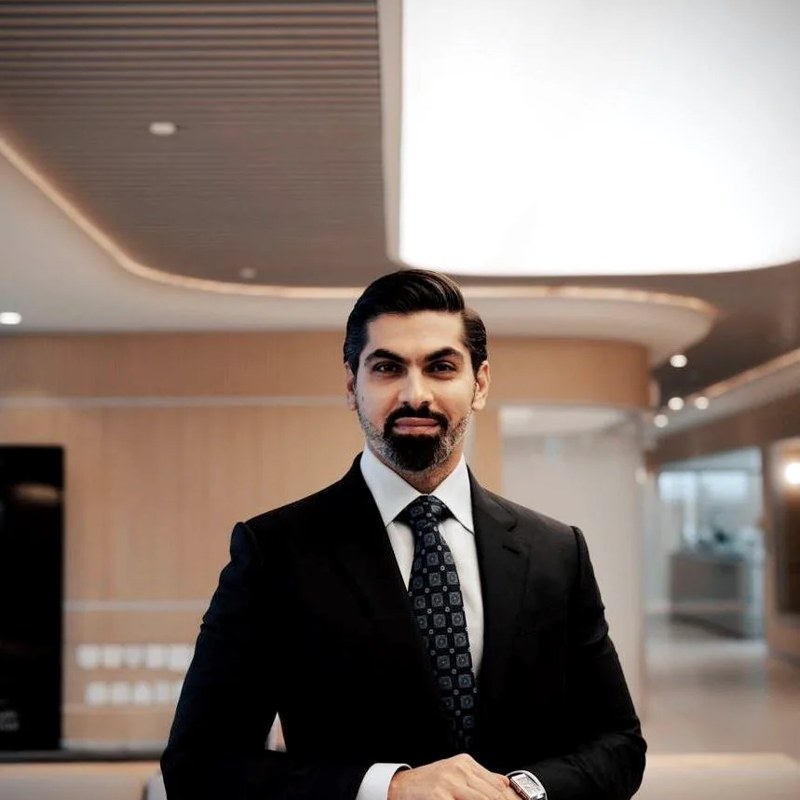
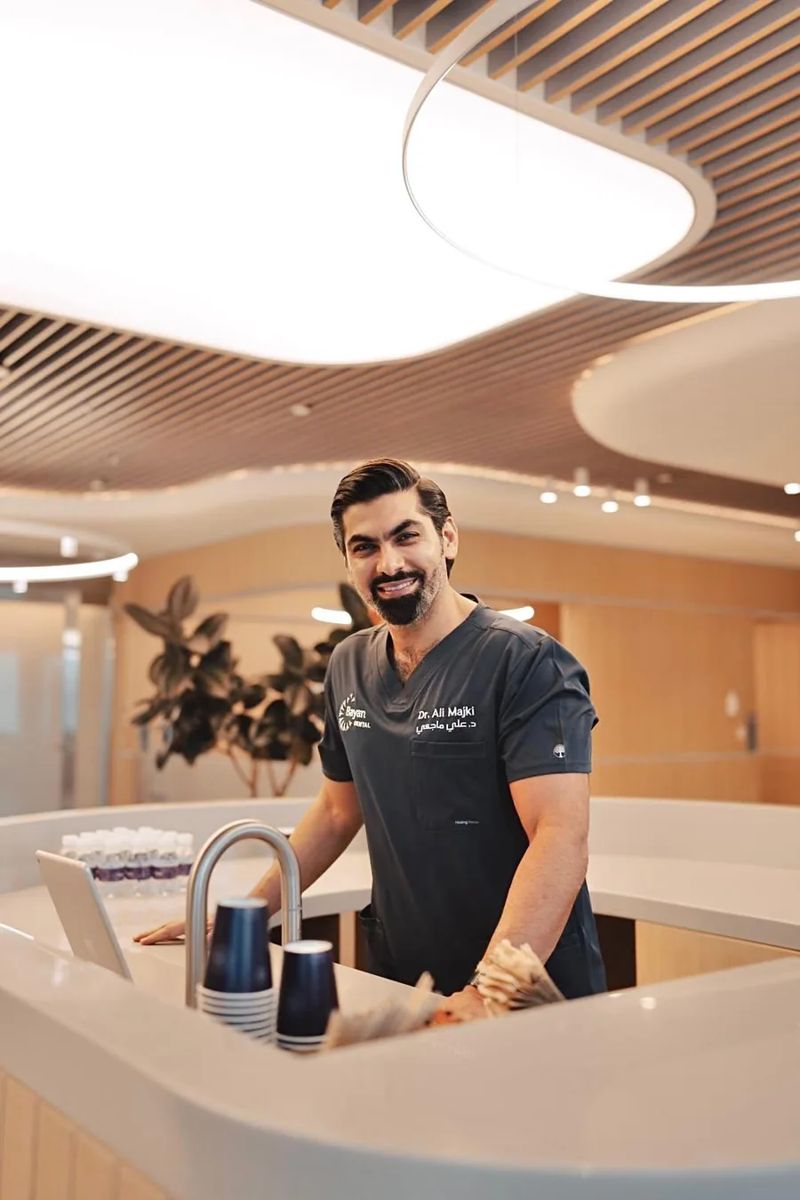
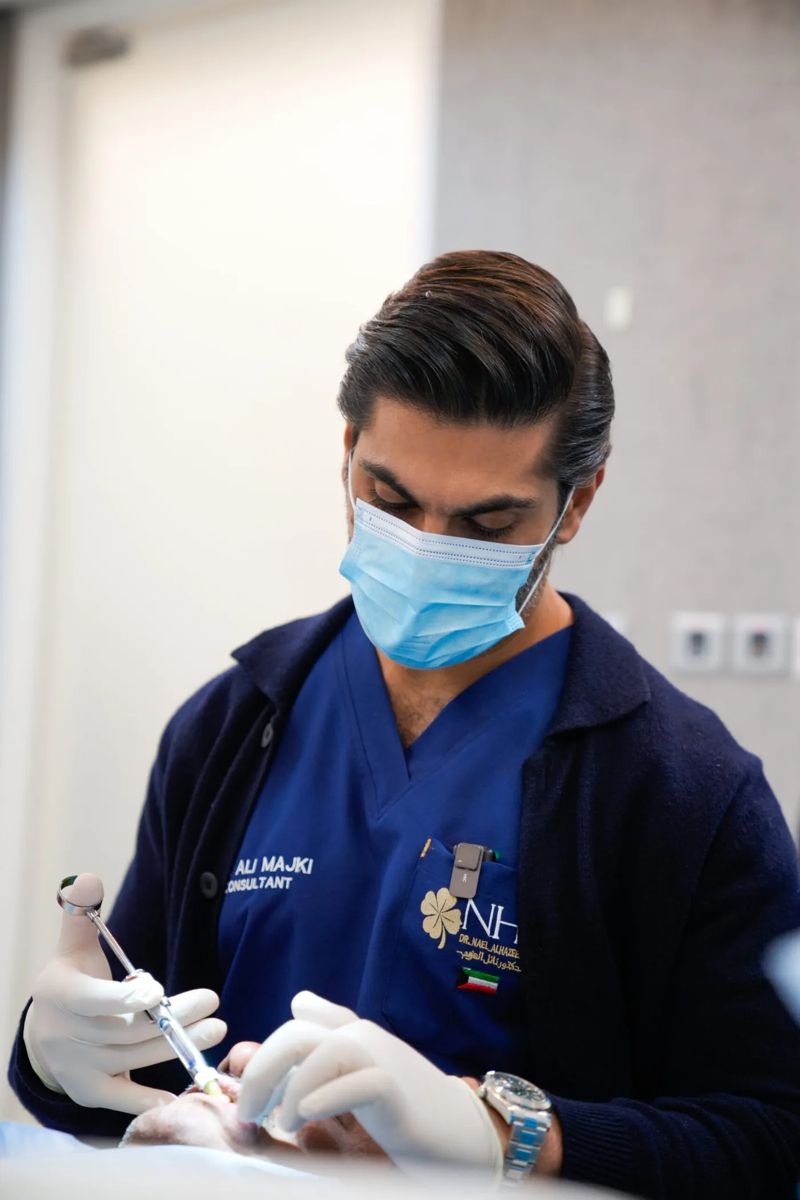
Dr. Ali Majki is a Consultant in Comprehensive & Cosmetic Dentistry, licensed by the Kuwait Ministry of Health, with more than 20 years in practice. He trained in the United States, qualifying with a DDS from the University of Missouri-Kansas City in 2005, and later gained the MFD (2008) and MGDS (2011) of the Royal College of Surgeons in Ireland. He treats patients only at Aline Dental in Shaab.
People also search for an “expat dentist kuwait” or the “best dentist kuwait”. No clinic can honestly claim the second, and you do not need it. You need a licensed dentist whose field matches your problem and who explains the plan in a language you understand.
Scientific sources
Diamond L., Izquierdo K., Canfield D., Matsoukas K., Gany F. A Systematic Review of the Impact of Patient-Physician Non-English Language Concordance on Quality of Care and Outcomes. Journal of General Internal Medicine, 2019. doi:10.1007/s11606-019-04847-5
Reid K.I. Informed Consent in Dentistry. Journal of Law, Medicine & Ethics, 2017. doi:10.1177/1073110517703102
Faculty of Dentistry, Royal College of Surgeons in Ireland. MFD Examination and MGDS Examination. facultyofdentistry.ie/examinations/general-examinations (accessed November 2026).
Frequently asked questions
How do I find an English-speaking dentist in Kuwait? Shortlist clinics whose dentists trained or qualified in English, then confirm at the first visit that the findings and the plan are explained and written in English.
How do I know a dentist in Kuwait is licensed? Every practising dentist must hold a Ministry of Health licence. Ask the clinic for the title and field shown on it.
Is an American-trained dentist better? Not by definition. The country of training tells you about the system and the language, not about skill in a particular treatment. Ask about experience with the treatment you need.
Can I get my dental records in English when I leave Kuwait? Ask at the start of treatment. Copies of X-rays, scans and a written summary make it far easier for your next dentist to continue your care.
Do I need a specialist or a general dentist? For most care, a general or comprehensive dentist plans and treats. Complex orthodontics, surgery, advanced gum disease and difficult root canals belong with the relevant specialist.
Where can I see an English-speaking dentist in Kuwait? Dr. Ali Majki sees patients at Aline Dental in Shaab, Kuwait; patients come to him from across Kuwait — from Jahra to Al-Rai and The Avenues — and from Doha and Qatar.